
Why Failure Should Be a Required Course in Every School

Failure has a bad reputation. In most schools, it’s something to avoid, fear, or quietly recover from. Red marks on papers, low grades, missed answers — all signals that something went wrong. But what if we’ve misunderstood failure all along? What if it isn’t the opposite of success, but the path to it? In a world that demands adaptability, creativity, and resilience, students need more than perfect report cards. They need the skills that come from trying, stumbling, adjusting, and trying again. Maybe it’s time we treated failure not as a setback, but as a subject worth studying.
Failure Builds Real-World Resilience
Outside of school, setbacks are inevitable. Job applications get rejected. Businesses flop. Creative projects fall flat. Relationships hit rough patches. The real world doesn’t operate on unlimited retakes or neatly weighted grading systems. It rewards persistence. When students are shielded from failure or penalized harshly for it, they may grow up fearing risks. But when they’re taught that failure is a natural and necessary part of growth, they develop resilience. They learn to recover, reflect, and move forward. That mindset shift can be more valuable than any single academic achievement.
Mistakes Spark Deeper Learning
There’s something powerful about getting it wrong. When students make mistakes and then analyze them, they engage more deeply with the material. They ask questions. They look for patterns. They refine their thinking. If every answer comes easily, there’s little reason to stretch. Struggle, on the other hand, forces the brain to work harder. It strengthens understanding and memory. A math problem solved perfectly on the first try might feel good, but the one that requires three attempts often teaches more. Failure slows us down just enough to really think.
Risk-Taking Fuels Creativity

Innovation doesn’t come from playing it safe. It comes from experimenting, testing bold ideas, and occasionally falling flat. In classrooms where only correct answers are celebrated, students may hesitate to share unconventional thoughts. When failure is normalized, creativity flourishes. Students feel freer to brainstorm unusual solutions, propose new interpretations, or build ambitious projects. Even if an idea doesn’t succeed, the process of exploring it builds confidence and imagination. Schools that treat failure as feedback — rather than a verdict — create space for innovation.
Redefining Success Beyond Grades
Grades often become the ultimate measure of worth in school. But numbers can’t capture effort, growth, or perseverance. A student who improves from struggling to being competent has achieved something meaningful, even if the final grade isn’t perfect. By reframing failure as progress in motion, educators can emphasize growth over performance. Reflection assignments, revision opportunities, and process-based evaluations encourage students to see learning as a journey. Success becomes less about avoiding mistakes and more about evolving through them.
Teaching Reflection and Accountability
Failure without reflection doesn’t teach much. But failure paired with honest evaluation can be transformative. Students should be guided to ask: What went wrong? What could I try differently next time? What did this experience teach me? This kind of structured reflection builds accountability. Instead of blaming circumstances or giving up, students learn to assess their own choices and strategies. That habit carries far beyond the classroom. Adults who can evaluate their missteps calmly and constructively are better equipped to grow in any field.
Creating Safe Spaces to Fail
For failure to become a productive part of education, classrooms must feel safe. Students need to know that mistakes won’t lead to humiliation or harsh judgment. Encouragement, constructive feedback, and supportive peer cultures make all the difference. Teachers can model this mindset by sharing their own challenges and learning experiences. When authority figures admit imperfection, it normalizes the process. A safe environment doesn’t remove standards or accountability; it simply ensures that setbacks are stepping stones rather than stopping points.
Failure isn’t a flaw in the learning process. It is the learning process. When schools treat mistakes as disasters, students internalize fear. When they treat them as data, students gain insight. By embracing failure as an essential part of growth, we prepare young people not just to succeed in controlled environments but to navigate the unpredictable realities of life. If resilience, creativity, and adaptability are the true goals of education, then failure deserves …
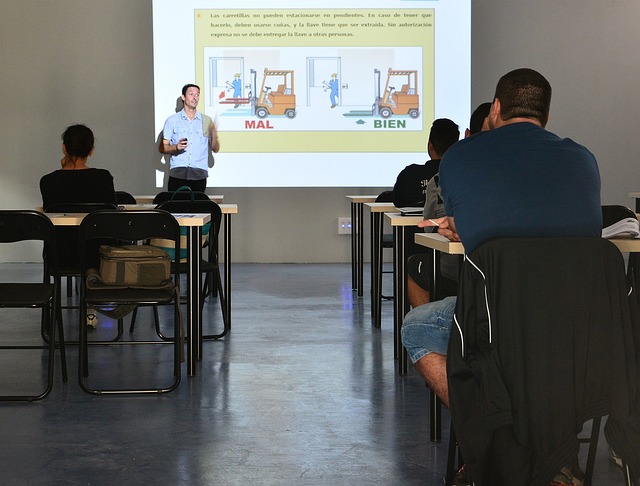
 The white card course training is designed to make sure that workers are aware and knowledgeable of the potential hazards they can face in a construction environment. By attending the course, workers learn how to recognize these potential dangers and be able to take appropriate action if needed.
 The way any learner understands and processes learning material will usually vary on their learning styles. By using an app that can properly facilitate their preferred learning style, while incorporating the curriculum requirements, the students will accelerate their learning processes and improve them in a myriad of ways. Of course, this just reinforces the fact that a quality app with quality content can help a student achieve their educational goals much faster.
 The future of education undoubtedly lies in technology, specifically the internet and mobile technologies. What this means is that they should not only focus on the quality of content but also user friendliness. Simply put, they will have to be designed to suit the needs of all kinds of learners. Once we reach a point where we have apps that are available to all students, the learning standards will progress and improve. If every single student, who uses these apps, begins seeing notable improvements, the entire landscape of education will change, and with that, the society in general.…